Bio-Technology Finishing School
Bio-Technology Finishing School (BTFS) at The Oxford College of Science
“Even the Greatest Thought is Naught, if not Applied”
- The Philosophy behind the BTFS program at The Oxford College of Science
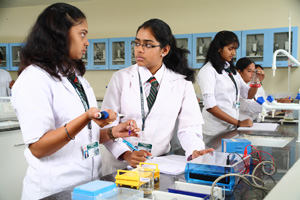
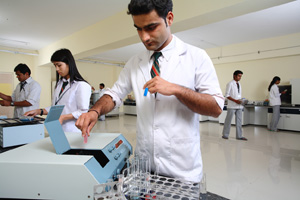
In the Millennium Biotech Policy-II, the Government of Karnataka had initiated establishment of finishing schools across the state. Twelve BT Finishing Schools (BTFS) have been established in Karnataka with appropriate course content and duration to equip graduates and post-graduates with necessary employable skills and to make them industry ready. The Oxford College of Science was selected to start the Bio-Technology Finishing School (BTFS) program PG Diploma in Cellular and Molecular Diagnostics from September 2011
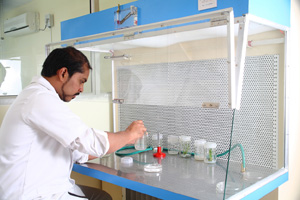
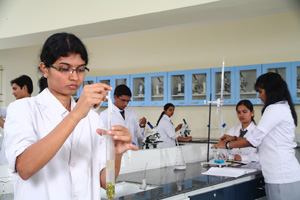
The program is affiliated to the Karnataka State Open University, Mysore and the selected students are being provided stipend of Rs. 5,000/- per month from the Department of Biotechnology (DBT), Govt. of India throughout the duration of the program (1 Year).
Domain:
“Cellular and Molecular Diagnostics”
Duration:
12 months- Course work (6 months) + Internship (6 months)
Eligibility
Candidates must have a minimum of 50% in Masters degree from Universities of the state or any other University recognized as equivalent in Life Sciences, Biotechnology, Microbiology, Biochemistry, Bioinformatics or any other life science related courses; B.E./B.Tech. – Biotechnology, Bioinformatics; Bachelor of Pharmacy, Agriculture, Veterinary, MBBS and BDS are also eligible to apply.
Candidates who have appeared for the M.Sc/B.E. final exams can also apply. Upon selection, a provisional degree certificate should be submitted to the respective colleges within two weeks of course commencement.
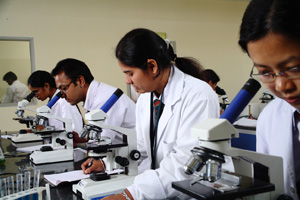
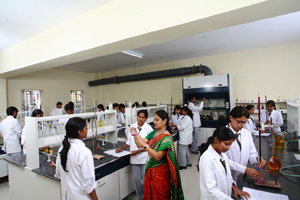
Selection: Registered candidates will have to clear the Karnataka Biotechnology Aptitude Test (KBAT) conducted online. Those who clear this will be screened and selected by interviews conducted by panels of experts from both academic and industry. For details click www.btfskarnataka.org
Introduction
Diagnosis of human diseases has continued to evolve and come to the forefront as an important growing sector in the field of healthcare management over the past few decades. With the advances in translational technologies, diagnostic industries have been growing rapidly, integrating recent advances in genomics and proteomics into their arsenal. In this ever growing field, there is immediate need for trained personnel who are not only equipped with knowledge to understand the relevance of diagnostic tests, but are also able to handle the sophisticated equipment used in the modern diagnostic laboratories. Biotechnology Finishing School at the Oxford College of Science aims to train and nurture potential innovators to cater to the increasing demand in this rapidly growing sector of the healthcare industry both in India and abroad.
Scope and Application
Currently, there is a need for skilled personnel who cater to the needs of diagnostic industries. They are essential in adapting, discovering, developing and translating various diagnostic tests. It is envisaged that there will be a continued and growing demand for rapid, reliable and high-throughput, cost-effective diagnostic tests in the future.
The Indian In Vitro Diagnostics market is expanding at a rate of 18 % p.a. and the sector has emerged as one of the best segments in the Indian healthcare industry. A new research report by RNCOS entitled “Indian Diagnostic Market Outlook to 2015” showed that Indian diagnostics continues to witness sustained growth and development in all its segments. The lab services segment of the Indian diagnostic market is estimated to grow at a CAGR of around 26% during 2012-2015. (Ref:http://www.rncos.com/Press_Releases/Indian-Diagnostics-Market-Sustained-Growth.htm)
Curriculum
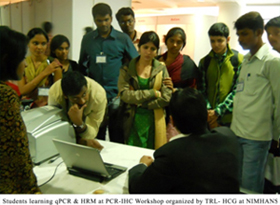
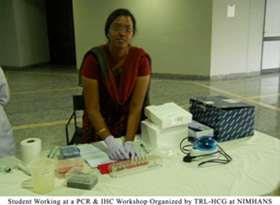
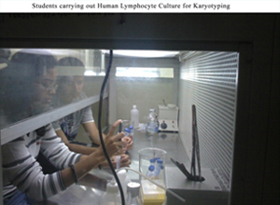
The curriculum of the Biotechnology Finishing School in Cellular and Molecular Diagnostics consists of hands-on training in routine as well as state of the art technologies with a sound background on principles and practices of each technology. With the sophisticated facilities acquired and built specifically for this, finishing schools have the required personnel, manpower and the knowledge to train future generations of workforce to cater to the needs of diagnostic industries. Furthermore, there is intense interaction with the diagnostic industries and their constant input and feedback benefits the trainees.
Placements
Eleven out of the eleven students have been offered jobs post-internship across the country (100% Placement).
Industrial Partners:
SRL Laboratories, Apollo Hospitals, Triesta Reference Laboratory- HCG Hospital, Avesthagen Pvt. Ltd, Xcyton Diagnostics , Narayana Hrudayalaya, Polyclone Bioservices, Syngene International, Biocon Pvt. Ltd. Bhat Biotech India (P) Ltd, Sangenomics Research Labs, Amnion Biosciences, Optimus Pharma Consulting and Aigle Biosolutions .
To learn more about the BTFS Program & KBAT Examination – BTFS Karnataka (http://www.btfskarnataka.org/)